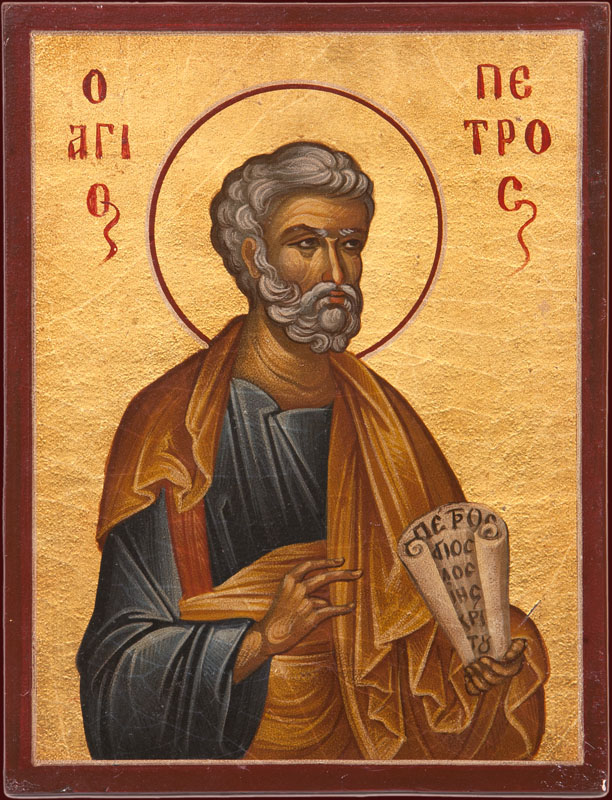
Bernard Mizeki
Catechist & Martyr (of Mozambique)
icon by Tobias Haller
Almighty and everlasting God, who kindled the flame of your Love in the
heart of your holy martyr Bernard Mizeki: Grant to us, your humble
servants, a like faith and power of love, that we who rejoice in his
triumph may profit by his example; through Jesus Christ our Lord, who
lives and reigns with you and the Holy Spirit, one God, for ever and
ever. Amen.
They begged him to leave, but he refused. He knew
his life was in danger, but he would not leave those he had been
teaching the Christian Faith, to those whom he had given his love. So he
stayed, not knowing what would come next. His name was Bernard Mizeki.
The year was 1896. Why did he stay?
An Anglican Bishop some 80 years later in an another part of Africa put
it this way, “In Uganda, during the eight years in the 1970s when Idi
Amin and his men slaughtered probably half a million Ugandans, "We live
today and are gone tomorrow" was the common phrase. We learned that
living in danger, when the Lord Jesus is the focus of your life, can be
liberating. For one thing, you are no longer imprisoned by your own
security, because there is none. So the important security that people
sought was to be anchored in God.” (from Revolutionary Love by Festo
Kivengere)
Bernard Mizeki was anchored in God. He was born Mamiyeri Mitseka Gwambe
in 1861 in the Inhambane district of Portuguese East Africa which we
know today as Mozambique. When he was about twelve years old, he left
his home and went to Capetown, South Africa. In his 20s, he began to
attend classes at an Anglican school. Under the influence of his
teachers, from the Society of Saint John the Evangelist, he was baptized
in 1886 and took on the name Bernard Mizeki. In his schooling, he
mastered English, French, Dutch, and several local African languages.
After
his baptism, he was trained as a lay catechist, one who taught the
Christian faith to others. After graduating, he accompanied Bishop
Knight-Bruce to Mashonaland, a tribal area in what is today Zimbabwe.
In 1891 the bishop assigned him to Nhowe and there he lived among that
tribe. He prayed the Anglican hours each day, tended his garden, and
studied the local language so he could talk and pray and teach them in
their own language, which also helped him cultivate friendships with the
people.
With the chief's permission, he moved his huts onto a
nearby plateau, next to a grove of trees believed to be sacred to the
ancestral spirits of the Mashona. This angered the shamans when he cut
some of the trees down and carved crosses into others. Although he
opposed some of the tribal religious traditions, Bernard was attentive
to the nuances of their religion and developed an approach that built on
the people's faith in one God, and on their sensitivity to the spirit,
while at the same time proclaiming Christ. In many ways, he reminds me
of St. Patrick and what he did among the Irish, cultivating the faith in
similar soil, helping them see the Christian faith in what they already
knew.
Sadly, his life would not end so peaceably as St.
Patrick’s did in Ireland. In 1896, when tensions reached a fevered
pitch in Mashonaland, missionaries were ordered out for their safety.
Bernard refused to go. On June 18, 1896, Bernard was killed by the
local shaman and his huts and his mission destroyed.
And yet his
work did not die with him. His pregnant wife survived and in fact, the
first baptisms from that tribe followed his death, including his wife
and child. He is revered among African Anglicans and is considered both
a martyr and a saint.
In our reading from Leviticus, “The LORD spoke to Moses, saying: Speak
to all the congregation and say: You shall be holy, for I the LORD your
God am holy. You shall not hate in your heart…You shall not take
vengeance or bear a grudge against any of your people, but you shall
love your neighbor as yourself: I am the LORD.”
This was true of the life of Bernard Mizeki. Who refused to go down the
road of hate, even when threatened by the local religious leaders. He
knew his anchor was in God, that Jesus guided him onward as he loved
everyone he was with. He tried to live that holy life in prayer and in
love to whom he was called. And like St. Paul, he understood that his
work was not for himself…
“According to the grace of God given to me, like a skilled master
builder I laid a foundation, and someone else is building on it. Each
builder must choose with care how to build on it. For no one can lay any
foundation other than the one that has been laid; that foundation is
Jesus Christ. So let no one boast about human leaders. For all things
are yours, whether Paul or Apollos or Cephas or the world or life or
death or the present or the future-- all belong to you, and you belong
to Christ, and Christ belongs to God.”
The foundation laid by Bernard Mizeki was built upon by many other
Christians in African in the decades since his death. He knew he
belonged to Christ and he wanted to share that with others, in their own
language and customs. And he was trying to live as Jesus had taught.
Many shrines were set up to remember his work and his martyrdom.
In today’s Gospel, Jesus said “You have heard that it was said, `You
shall love your neighbor and hate your enemy.' But I say to you, Love
your enemies and pray for those who persecute you, so that you may be
children of your Father in heaven; for he makes his sun rise on the evil
and on the good, and sends rain on the righteous and on the
unrighteous.”
Bernard tried to love his enemies even at the end, worrying more about
his wife and those he taught, then his own life. He tried to be as Jesus
said, “Be perfect, therefore, as your heavenly Father is perfect."
But
of course, Bernard wasn’t, nor are any of us perfect. But Jesus calls
us to work towards that perfection in how we live our lives. As one
person has written on Bernard… “While attaining the highest, he yet
comes within the comprehension of the lowest. He is not as saints and
martyrs often seem to be – a being of a different order. He brings the
crown of martyrdom within the compass of his people's understanding; he
is bone of their bone and flesh of their flesh .... He stands for modern
Africa. He stands true to type. In all the happenings of his life –
save in the manner of his death – he recapitulates the story of
countless thousands of his African brothers and sisters.” (Fr. Osmund
Victor)
Today, we are called to have a like faith and power of love that Bernard
Mizeki had in Jesus, who “proclaimed that he followed the Holy and
Loving Spirit, whom we call God and because of this, he had lost all
anxiety and no one could ever disturb his peace and happiness.” (from an
eyewitness to one of his teachings)