Saturday, February 13, 2016

Discussing Race & Racial Justice & the Beloved Community in Lent


Lenten Series: Engaging the Beloved Community

"The aftermath of nonviolence is the creation of the beloved community. The aftermath of nonviolence is redemption. The aftermath of nonviolence is reconciliation. The aftermath of violence is emptiness and bitterness.” Dr. Martin Luther King Jr. spoke those words in a 1957 speech, Birth of a New Nation. The tenets of nonviolence that King espoused are the basis for envisioning and building the Beloved Community. The Beloved Community, King believed, is a tangible state of community in which there is no hunger, racism, or oppression. Because each person is equally valued, nonviolence is the answer to conflict, and justice reigns. Reaching the Beloved Community requires difficult and long-term community work rooted in love and justice. Today, as our world watches the children of Flint suffer from lead in their water supply and young people of color cry out for justice in their streets, people of faith above all are called to reengage the holy work of building the Beloved Community. Last summer, the General Convention of The Episcopal Church voted to prioritize evangelism and racial reconciliation by allocating significant funds to that work in our Church’s budget. By funding these dual priorities, The Episcopal Church signified to the world that it is ready to fully engage the work of racial reconciliation and justice. As we enter the holy season of Lent on this Ash Wednesday, we invite you to turn in a new direction toward reconciliation, and walk with us as we explore what it means for The Episcopal Church to build the Beloved Community.

http://advocacy.episcopalchurch.org/blog

Discussing Race in Lent: Free Online Series
 
This Lent, ChurchNext, in partnership with Trinity Institute, is offering free online series on racial justice, for all who desire to journey deeper into faith. This series of five courses is based on Trinity Institute’s 2016 conference, Listen for a Change: Sacred Conversations for Racial Justice.

The Five Free Courses

To take part, you must sign up with ChurchNext.tv. You can access the courses at anytime by clicking on the links below. Each course will guide you from video to questions on content and then downloadable discussion questions that invite you investigate how these topics intersect with your daily life. The individual option offers online interaction with other students, the group option includes a facilitator’s guide.

Spirituality and Racial Justice with Michael Curry
available in For Individuals and For Groups formats.

Whiteness and Racial Justice with Kelly Brown Douglas
available in For Individuals and For Groups formats.

Reparation and Racial Justice with Jennifer Harvey,
available in For Individualsand For Groups formats

Theology and Racial Justice with J. Kameron Carter
available in For Individualsand For Groups formats

Racism and Racial Justice with Eduardo Bonilla-Silva
available in For Individuals and For Groups formats

Potential Outcomes

It is the Church’s responsibility and its privilege to take a leadership role in building racial justice. As Bishop Curry teaches in his class, we must review our history, confront our mistakes with humility and courage, and work to turn our culture in a new direction. It is our responsibility, in short, to find the courage to rise up and follow God away from racial oppression, in the hope that others will follow us. We hope these courses help you and your congregation work effectively with the many people across our country who are striving to build a more just world.  For more from ChurchNext on Listen for a Change: Sacred Conversations on Racial Justice and how it might be used during Lent, read their blog post here.

Wednesday, January 27, 2016

Church to focus on anti-racism, reconciliation

From today's Forward Day by Day...

Genesis 16:13 So she named the Lord who spoke to her, “You are El-roi.”

Every day, we become more and more aware of national and local discussions about race and the biases we hold. Some prejudices we are aware of, and others lie beneath our consciousness. These biases are a kind of impaired sight. We are not typically consciously judging people based on how they look, but our subconscious vision and our judgment is fallible.


In our Genesis lesson, Hagar calls God El-roi, which means “God who sees” or “God of seeing.” If we follow the God of seeing and we follow Jesus (who instructs us to love others, even the enemy and the stranger), then we are compelled to do all we can to correct our vision.


I often imagine religion, at its best, as a corrective lens. Our liturgies and prayers and communities are tools to help us know and love each other better, to bring us closer to one another where we can see more clearly.

Read it here.

For further consideration:

http://episcopaldigitalnetwork.com/ens/2016/01/22/ferguson-pilgrims-study-systemic-racism-injustice-and-reconciliation/


https://sojo.net/articles/stand-your-ground-shows-racist-culture-continuing-kill


http://publishersweekly.com/pw/by-topic/industry-news/religion/article/66552-baltimore-theologian-s-book-on-violence-to-publish-in-wake-of-riots.html

Saturday, January 23, 2016

Racial Equality (Free ChurchNext) Lenten Curriculum


 (The 2016 Trinity Institute conference (TI2016), "Listen for a Change: Sacred Conversations for Racial Justice," began Thursday, January 21 with a sermon from the Most Rev. Michael Curry, Presiding Bishop of the Episcopal Church. Preaching on chapter 8 of the Gospel according to Matthew, the story of the centurion's servant, Curry urged his listeners to join what he calls "the Jesus movement" to change the world.)
Trinity Institute and ChurchNext are teaming up to help you and your congregation go deeper with one of the most pressing issues of our time. Based on Trinity Institute’s 2016 conference, Listen for a Change: Sacred Conversations for Racial Justice, a complete Lenten curriculum is being offered including these presenters: Presiding Bishop Michael Curry, Eduardo Bonilla-Silva, PhD., Kelly Brown Douglas, MDiv, PhD., Jennifer Harvey, and J. Kameron Carter, PhD.

Each course is free during Lent, 2016.

We’ve just launched the first of these five courses: Spirituality and Racial Equality with Michael Curry, which is available in two formats, For Individuals and For Groups. The second course, Whiteness and Racial Equality with Kelly Brown Douglas, will launch on January 24, with the other three courses to follow on February 7
Bishop Curry has made racial reconciliation one of the priorities of his ministry as Presiding Bishop. He has said,”The choice is ours: chaos or community. That work is the work of finding ways for people to come together to really create and be what Dr. King called the ‘beloved community.’ That’s not just some Utopian ideal. That, frankly, is the difference between life and death for the world.”

Friday, January 22, 2016

We Need to Talk About an #Injustice


http://www.ted.com In an engaging and personal talk -- with cameo appearances from his grandmother and Rosa Parks -- human rights lawyer Bryan Stevenson shares some hard truths about America's justice system, starting with a massive imbalance along racial lines: a third of the country's black male population has been incarcerated at some point in their lives. (from Youtube)

This is a video worth watching and thinking about...

Almighty God, who sittest in the throne judging right: We humbly beseech thee to bless the courts of justice and the magistrates in all this land; and give unto them the spirit of wisdom and understanding, that they may discern the truth, and impartially administer the law in the fear of thee alone; through him who shall come to be our Judge, thy Son our Savior Jesus Christ. Amen.

Grant, O God, that your holy and life-giving Spirit may so move every human heart [and especially the hearts of the people of this land], that barriers which divide us may crumble, suspicions disappear, and hatreds cease; that our divisions being healed, we may live in justice and peace; through Jesus Christ our Lord. Amen.
 
Lear more about what you can do here: http://www.eji.org/

Sunday, January 17, 2016

Richard Rohr on White Privilege

There is a very good article in the Huffington Post on White Privilege,;an interview with Richard Rohr.

Excerpt:


RT: What does White privilege mean to you? How do you define it?
White privilege is largely hidden from our eyes if we are white. Why? Because it is structural instead of psychological, and we tend to interpret most things in personal, individual, and psychological ways. Since we do not consciously have racist attitudes or overt racist behavior, we kindly judge ourselves to be open minded, egalitarian, "liberal", and therefore surely not racist. Because we have never been on the other side, we largely do not recognize the structural access, the trust we think we deserve, the assumption that we always belong and do not have to earn our belonging, the "we set the tone" mood that we white folks live inside of--and take totally for granted and even naturally deserved. Only the outsider can spot all these attitudes in us. It is especially hidden in countries and all groupings where white people are the majority.
RT: Do you think you have benefited from white privilege? If so, how?
I would have never seen it if I had not been forced outside of my dominant white culture by travel, by working in the jail, by hearing stories from counselees, and frankly by making a complete fool of myself in so many social settings--most of which I had the freedom to avoid! And so recognition was slow in coming. I am not only white, but I am male, overeducated, clergy, a Catholic celibate, healthy, and American! I profited from white privilege on so many fronts that I had to misread the situation many, many times before I began to feel what others feel and see what others could clearly see. Many must have just rolled their eyes and hopefully forgiven me!

Read it all here: http://www.huffingtonpost.com/romal-tune/richard-rohr-on-white-pri_b_8985742.html

Tuesday, January 5, 2016

Confronting the Demon of Racism

A wonderful video clip from Trinity Wall Street:


Episcopal Church Presiding Bishop Michael Curry will preach Thursday January 21 at Trinity Church Wall Street to open TI2016 “Listen for a Change: Sacred Conversations for Racial Justice.”  Bishop Curry compares racism to a demon, but offers some encouraging words: he says there is a way for each of us to strip that demon of its power.
(from https://www.trinitywallstreet.org/video/ti2016-confronting-demon-racism)

Thursday, October 22, 2015

Being a Christian in Everyday Life

The Anglican Witness initiative, coordinated by the Anglican Communion Office, has produced a new video, Being a Christian in everyday life, to highlight current issues in churches in the Global South and North, with a view to a possible Communion-wide response through a focus on discipleship or Christian living. [ACNS]

Learn more here.

Wednesday, October 14, 2015

Gun Violence

In the face of so much gun violence in our society (mass shootings, children killing children, murder-suicides, and accidents), we need to ask what we can do to limit the carnage we see daily.

I found this article to be helpful:

http://www.nytimes.com/2015/10/04/opinion/sunday/nicholas-kristof-a-new-way-to-tackle-gun-deaths.html
(and if you think his statistics are wrong, go here: http://www.politifact.com/punditfact/statements/2015/oct/06/nicholas-kristof/nicholas-kristof-gun-deaths-preschoolers-police/ )

He is right.  If we are going to live with them, we must decide the rules, and the current rules are ineffective...
“We will no longer be silent while violence permeates our world, our society, our Church, our homes and ourselves. Our faith calls us to be ministers of reconciliation, to give voice to the voiceless and to strive for justice in the name of our Lord.” Bishops Ian T. Douglas, James E. Curry and Laura J. Ahrens of the Episcopal Church in Connecticut
Learn more here: http://bishopsagainstgunviolence.org/

Saturday, October 3, 2015

Changing the Narrative on Race

This is important and I found it to be very helpful, even if it is only a taste.  I look forward to more from Trinity Church and the Trinity Institute...

We indeed need truth and reconciliation here.


Saturday, September 19, 2015

Mass Incarceration?


At General Convention this year, a resolution passed: A183 Recommended Book Study of the Triennium: “The New Jim Crow: Mass Incarceration in the Age of Colorblindness” by Michelle Alexander

You can read about it here.

There is a lively debate going on about this but there is no denying that mass incarceration exists.

From a conservative standpoint:

http://www.nationalreview.com/article/415557/republicans-rethinking-tough-crime-michael-tanner

I am glad to see the author acknowledges the need to end the status quo even if he misses on some issues; yes, racism is real.  For profit prisons exacerbate the problem.  And choice is not all that its cracked up to be...

Looking at it through the lens of race and family:

http://www.theatlantic.com/magazine/archive/2015/10/the-black-family-in-the-age-of-mass-incarceration/403246/

We will in 2016, begin our discussions at our parish on mass incarceration.

In the mean time, to just think about a piece of the larger issue of mass incarceration, here is John Oliver of HBO on public defenders (NSFW - language!):


A lively debate is happening here with some good back and forth:

http://www.theatlantic.com/notes/all/2015/09/debating-mass-incarceration/405694/

Tuesday, September 1, 2015

The Big Class: A Christian Response to Gun Violence

Episcopal Bishops Teach Free, Online Course: A Christian Response to Gun Violence
September 14 - 28
www.churchnext.tv > The Big Class

The grief around senseless killings involving firearms has put a pall over our nation, and many concerned Christians wonder what we can do. Join thousands of people from around the world for a free online class called "A Christian Response to Gun Violence."

The course is taught by Episcopal bishops Eugene Sutton (Maryland) and Ian Douglas (Connecticut), who are co-founders of Bishops United Against Gun Violence.

Register for free beginning Monday, August 31, go to churchnext.tv and click on The Big Class.

Then the course can be taken for free from September 14 - 28. It will take an average student
45 minutes to complete and no special software is required. The course is free to all!

Tuesday, August 18, 2015

Living into Marriage Equality for Christians

I came across two posts recently that look at the issue of Marriage Equality through the eyes of Scripture and the Sacraments. I believe Christians should be celebrating with our brothers and sisters who are LGBT and supporting them in their lives (more on that soon).

But for those on the fence or not sure what they should believe about all this, I invite you to look at these two articles (links below):

http://www.therebelgod.com/2015/08/homosexuality-and-why-you-cant-remove.html

In other words, their position —and this is by far the most common position among conservatives today— is essentially that it does not matter what you or I think, it does not matter what we can observe, it does not matter what gay people tell us... all that matters is what the Bible says. The Bible condemns it, that settles it. All we need to do, they argue, is to look to what Scripture clearly teaches about homosexuality, and regard this as the final and authoritative word on the matter.
As I demonstrate in Disarming Scripture, there is a major flaw in this kind of reasoning. Using this exact same approach to the Bible has lead Christians in the past to support both slavery and child abuse based on the “authority of Scripture.”
https://sojo.net/articles/same-sex-marriage-and-sacramental-unity

In 1963, William Stringfellow - movement theologian, Sojourners mentor, and gay man - had the following to say about mainline churches who were pondering whether to join the struggle for African-American civil rights:
The issue here...is not some common spiritual values, nor natural law, nor middle axioms. The issue is baptism. The issue is the unity of all humanity wrought by God in the life and work of Christ. Baptism is the sacrament of that unity of all human life in God.
We hear these words anew in the present moment in light of the contemporary public debate over same-sex marriage.
Events in recent months have highlighted same-sex marriage as an issue of full inclusion in both church and society. We receive this as a kind of kairos moment for Christian disciples, specifically those like ourselves who enjoy heterosexual privilege (including the rights of marriage), to act in public solidarity with gays and lesbians, particularly those in the faith, too long shunted to the margin.
- See more at: https://sojo.net/articles/same-sex-marriage-and-sacramental-unity#sthash.gi1NRGry.dpuf
In 1963, William Stringfellow - movement theologian, Sojourners mentor, and gay man - had the following to say about mainline churches who were pondering whether to join the struggle for African-American civil rights:
The issue here...is not some common spiritual values, nor natural law, nor middle axioms. The issue is baptism. The issue is the unity of all humanity wrought by God in the life and work of Christ. Baptism is the sacrament of that unity of all human life in God.
We hear these words anew in the present moment in light of the contemporary public debate over same-sex marriage.

Tuesday, June 30, 2015

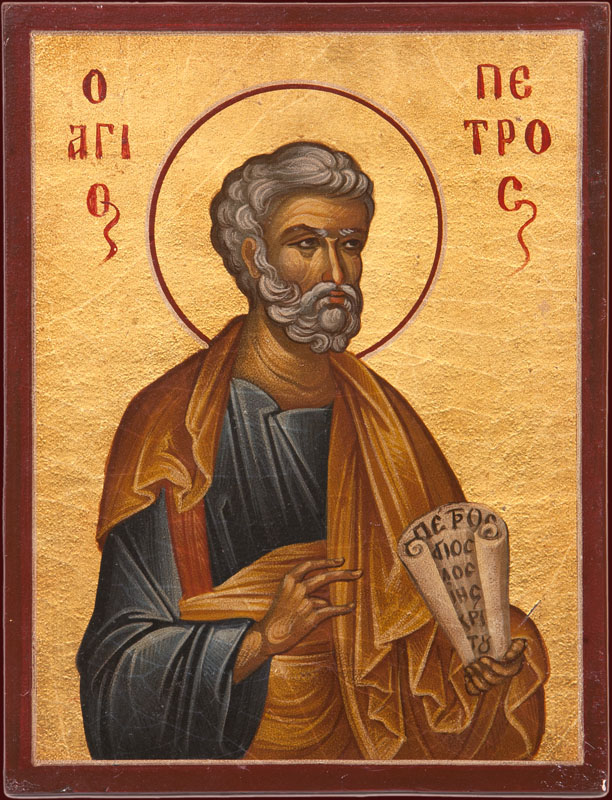
St. Peter's Day (& St. Paul)


St. Peter
(sonnet by Malcom Guite)
 
Impulsive master of misunderstanding
You comfort me with all your big mistakes;
Jumping the ship before you make the landing,
Placing the bet before you know the stakes.
I love the way you step out without knowing,
The way you sometimes speak before you think,
The way your broken faith is always growing,
The way he holds you even when you sink.
Born to a world that always tried to shame you,
Your shaky ego vulnerable to shame,
I love the way that Jesus chose to name you,
Before you knew how to deserve that name.
And in the end your Saviour let you prove
That each denial is undone by love.

Prayer for Saint Peter and Saint Paul  ~  June 29
 
Almighty God, whose blessed apostles Peter and Paul glorified
you by their martyrdom: Grant that your Church, instructed by
their teaching and example, and knit together in unity by your
Spirit, may ever stand firm upon the one foundation, which
is Jesus Christ our Lord; who lives and reigns with you, in the
unity of the Holy Spirit, one God, now and for ever. Amen.

Great article:  http://andrewmarrosb.wordpress.com/2013/06/25/peter-and-paul-the-churchs-quest-for-mimetic-unity/

Claiming Common Ground Against Gun Violence

This is a human issue, a political issue, a religious issue.

http://www.claimitgc.org/

Our Presiding Bishop elect:


https://www.facebook.com/EpiscopaliansAgainstGunViolence


Scenes from the event:


Addressing the issue at convention:

http://episcopaldigitalnetwork.com/ens/2015/06/28/general-convention-resolutions-target-gun-violence/

Thursday, June 18, 2015

Saint of the Week: Bernard Mizeki

Bernard Mizeki
Catechist & Martyr (of Mozambique)
icon by Tobias Haller

Almighty and everlasting God, who kindled the flame of your Love in the heart of your holy martyr Bernard Mizeki: Grant to us, your humble servants, a like faith and power of love, that we who rejoice in his triumph may profit by his example; through Jesus Christ our Lord, who lives and reigns with you and the Holy Spirit, one God, for ever and ever. Amen.

They begged him to leave, but he refused. He knew his life was in danger, but he would not leave those he had been teaching the Christian Faith, to those whom he had given his love. So he stayed, not knowing what would come next. His name was Bernard Mizeki. The year was 1896. Why did he stay?

An Anglican Bishop some 80 years later in an another part of Africa put it this way, “In Uganda, during the eight years in the 1970s when Idi Amin and his men slaughtered probably half a million Ugandans, "We live today and are gone tomorrow" was the common phrase. We learned that living in danger, when the Lord Jesus is the focus of your life, can be liberating. For one thing, you are no longer imprisoned by your own security, because there is none. So the important security that people sought was to be anchored in God.” (from Revolutionary Love by Festo Kivengere)
Bernard Mizeki was anchored in God. He was born Mamiyeri Mitseka Gwambe in 1861 in the Inhambane district of Portuguese East Africa which we know today as Mozambique. When he was about twelve years old, he left his home and went to Capetown, South Africa. In his 20s, he began to attend classes at an Anglican school. Under the influence of his teachers, from the Society of Saint John the Evangelist, he was baptized in 1886 and took on the name Bernard Mizeki. In his schooling, he mastered English, French, Dutch, and several local African languages.

After his baptism, he was trained as a lay catechist, one who taught the Christian faith to others. After graduating, he accompanied Bishop Knight-Bruce to Mashonaland, a tribal area in what is today Zimbabwe. In 1891 the bishop assigned him to Nhowe and there he lived among that tribe. He prayed the Anglican hours each day, tended his garden, and studied the local language so he could talk and pray and teach them in their own language, which also helped him cultivate friendships with the people.

With the chief's permission, he moved his huts onto a nearby plateau, next to a grove of trees believed to be sacred to the ancestral spirits of the Mashona. This angered the shamans when he cut some of the trees down and carved crosses into others. Although he opposed some of the tribal religious traditions, Bernard was attentive to the nuances of their religion and developed an approach that built on the people's faith in one God, and on their sensitivity to the spirit, while at the same time proclaiming Christ. In many ways, he reminds me of St. Patrick and what he did among the Irish, cultivating the faith in similar soil, helping them see the Christian faith in what they already knew.

Sadly, his life would not end so peaceably as St. Patrick’s did in Ireland. In 1896, when tensions reached a fevered pitch in Mashonaland, missionaries were ordered out for their safety. Bernard refused to go. On June 18, 1896, Bernard was killed by the local shaman and his huts and his mission destroyed.

And yet his work did not die with him. His pregnant wife survived and in fact, the first baptisms from that tribe followed his death, including his wife and child. He is revered among African Anglicans and is considered both a martyr and a saint.
In our reading from Leviticus, “The LORD spoke to Moses, saying: Speak to all the congregation and say: You shall be holy, for I the LORD your God am holy. You shall not hate in your heart…You shall not take vengeance or bear a grudge against any of your people, but you shall love your neighbor as yourself: I am the LORD.”
This was true of the life of Bernard Mizeki. Who refused to go down the road of hate, even when threatened by the local religious leaders. He knew his anchor was in God, that Jesus guided him onward as he loved everyone he was with. He tried to live that holy life in prayer and in love to whom he was called. And like St. Paul, he understood that his work was not for himself…
“According to the grace of God given to me, like a skilled master builder I laid a foundation, and someone else is building on it. Each builder must choose with care how to build on it. For no one can lay any foundation other than the one that has been laid; that foundation is Jesus Christ. So let no one boast about human leaders. For all things are yours, whether Paul or Apollos or Cephas or the world or life or death or the present or the future-- all belong to you, and you belong to Christ, and Christ belongs to God.”
The foundation laid by Bernard Mizeki was built upon by many other Christians in African in the decades since his death. He knew he belonged to Christ and he wanted to share that with others, in their own language and customs. And he was trying to live as Jesus had taught. Many shrines were set up to remember his work and his martyrdom.
In today’s Gospel, Jesus said “You have heard that it was said, `You shall love your neighbor and hate your enemy.' But I say to you, Love your enemies and pray for those who persecute you, so that you may be children of your Father in heaven; for he makes his sun rise on the evil and on the good, and sends rain on the righteous and on the unrighteous.”
Bernard tried to love his enemies even at the end, worrying more about his wife and those he taught, then his own life. He tried to be as Jesus said, “Be perfect, therefore, as your heavenly Father is perfect."

But of course, Bernard wasn’t, nor are any of us perfect. But Jesus calls us to work towards that perfection in how we live our lives. As one person has written on Bernard… “While attaining the highest, he yet comes within the comprehension of the lowest. He is not as saints and martyrs often seem to be – a being of a different order. He brings the crown of martyrdom within the compass of his people's understanding; he is bone of their bone and flesh of their flesh .... He stands for modern Africa. He stands true to type. In all the happenings of his life – save in the manner of his death – he recapitulates the story of countless thousands of his African brothers and sisters.” (Fr. Osmund Victor)
Today, we are called to have a like faith and power of love that Bernard Mizeki had in Jesus, who “proclaimed that he followed the Holy and Loving Spirit, whom we call God and because of this, he had lost all anxiety and no one could ever disturb his peace and happiness.” (from an eyewitness to one of his teachings)

Wednesday, June 17, 2015

Lowering the Toll of Violence

This is an important report on a study:

http://www.washingtonpost.com/blogs/govbeat/wp/2015/06/12/gun-killings-fell-by-40-percent-after-connecticut-passed-this-law/
In the early ’90s, gang shootings gripped Connecticut. Bystanders, including a 7-year-old girl, were getting gunned down in drive-bys. “The state is becoming a shooting gallery, and the public wants action,” an editorial in the Hartford Courant said at the time.

So in the summer of 1994, lawmakers hustled through a gun control bill in a special session. They hoped to curb shootings by requiring people to get a purchasing license before buying a handgun. The state would issue these permits to people who passed a background check and a gun safety training course.

At the time, private citizens could freely buy and sell guns secondhand, even to those with criminal records. Connecticut’s law sought to regulate that market. Even private handgun sales would have to be reported to the state, and buyers would need to have a permit. [...]

In a study released Thursday in the American Journal of Public Health, they estimate that the law reduced gun homicides by 40 percent between 1996 and 2005. That’s 296 lives saved in 10 years.
And that is how it should be.  It is so sad that we can trace guns that kill back to places with lax laws and the inability to keep those guns out of criminals hands.

But this is just a start.  We need to be looking at violence in all of its manifestations...

Discussing Violence in Church by Sharon Pearson has some very valuable resources for our conversations, advocacy and action.

http://rowsofsharon.com/2015/06/15/discussing-violence-in-church/

Wednesday, May 20, 2015

Episcopal Flag/Seal


On Oct. 16, 1940, the House of Bishops and the House of Deputies adopted an official flag for the Episcopal Church. This was the 251st anniversary of the day the General Convention ratified the Constitution and Canons and adopted the BCP. It was designed by William M. Baldwin (d. 1942), a member of the Cathedral of the Incarnation, Long Island, New York.

The symbolism of the flag has been explained as follows: The white field represents the purity of the Christian religion. The red cross represents the sacrifice of Jesus and the blood of the martyrs. The red cross on a white field is the cross of Saint George, the patron saint of England, indicating our descent from the Church of England. The blue in the upper left-hand corner is the light blue of the sky, often used by artists for the clothing of the Blessed Virgin. It is called Madonna blue and represents the human nature of our Lord, which he received from his mother. The nine white crosslets on the blue field represent the nine original dioceses of the Episcopal Church in America in 1789: Massachusetts, Connecticut, New York, New Jersey, Pennsylvania, Maryland, Virginia, Delaware, and South Carolina. They are arranged in the form of a St. Andrew's Cross to commemorate the fact that Samuel Seabury, the first American bishop, was consecrated in Aberdeen, Scotland, on Nov. 14, 1784. The colors red, white, and blue represent the United States and stand for the American branch of the Anglican Communion.

The same design is incorporated in the Episcopal Church seal, which was also adopted by the 1940 General Convention. The seal and flag serve as emblems of the Episcopal Church

(from An Episcopal Dictionary of the Church.)


Friday, March 27, 2015

Sunday (Church) School in 2015

I was able to participate in a workshop at the Episcopal Church in CT Spring Training & Gathering.  Sharon Pearson gave a wonderful presentation that looked at the history of sunday (church) school and asked some real good questions about it in 2015.

She posted them on her blog:

USA Today asked Has the sun set on Sunday school?

In part it says:
Yet it's worth noting that the reason MacNeil's kids don't attend Sunday school is lack of time. Instead of a day of rest, Sunday has become just another day for over-scheduled kids to be chauffeured from sports practice to music lessons or SAT tutoring. It doesn't help that parents themselves, so overwhelmed by life, are skipping church. 
Read the whole article here.

From Sharon's blog: "To help you get connected to others, I recommend the following curated websites that highlight best practices and share innovative ideas that are within our reach."
  • Building Faith – articles from practitioners regarding Christian formation
  • Forma – a network of creative Christian formation folks (lay/ordained, paid/volunteer, children/youth/young adult/adults) who dream big, have passion, and care helping others grow in faith
  • Vibrant Faith Ministries – research and ideas for all generations
  • Hope4ChristianEducation – a curated site of articles from a broad spectrum of denominations
  • Key Resources – book and curriculum reviews, digital ministry ideas
  • Worshipping with Children – resources and ideas for the inclusion of children in worship
  • StoryPath – using children’s literature to share God’s Story, including pairings with the Sunday lectionary

Wednesday, March 18, 2015

Big Class: A Simple Path to a Deeper Spiritual Life

You don’t have to worry about being inspired. Just do the work of daily spiritual growth and the inspiration will come.

newbeccaWe are so excited for our next Big Class, which runs 3/22 – 4/5 with Becca Stevens, founder of Magdalene and Thistle Farms. In “A Simple Path to a Deeper Spiritual Life,” Becca will help us explore what the spiritual life really means: how to believe, to hope, to experience resurrection, to be inspired. In four lessons, she shares what she has learned in her years of ministry and service, and how this wisdom can enrich our own journeys. She reminds us about the importance of just showing up, of believing, of surrendering, of giving ourselves space. And that love heals and changes and brings about resurrection and justice.


This short, free course will be open to all from March 22 – April 5; registration opens this Sunday, March 15. We invite you to join us and to share this course with friends and neighbors. Our prayer is that, as we enter the season of Easter, this course may renew and inspire our journeys to resurrection.


https://www.churchnext.tv/school/catalog/course/the-big-class-a-simple-path-to-a-deeper-spiritual-life-with-becca-stevens/

Wednesday, February 18, 2015

Lent Begins!


The Season of Lent begins with Ash Wednesday.  To aid your journey, follow the links below:


40 Ideas for Lent 2015
http://rachelheldevans.com/blog/40-ideas-for-lent-2015

Litany of Penitence 
http://experimentaltheology.blogspot.com/2015/02/litany-of-penitence.html

A Sonnet for Ash Wednesday
https://malcolmguite.wordpress.com/2015/02/17/a-sonnet-for-ash-wednesday-3/

Creating a Lenten Prayer Space at Home
http://www.buildfaith.org/2015/02/09/creating-lenten-prayer-space-home/

It’s time to… Stop, Pray, Work, Play & Love with SSJEhttp://ssje.org/ssje/time/

Lenten Challenge (Pray Worship Serve)
http://www.prayworshipserve.com/lenten-challenge/